The bluebirds and the dandelions are a package deal at my house.
If you’ve ever seen a bluebird fly past on sunny day, you know the feeling of being awestruck by a flash of color that looks like it couldn’t possibly have come from nature. That electric, neon blue never fails to make my heart leap with joyful recognition. For me, it’s what seals the deal that spring has finally arrived, bringing the answer to the eternal question, “will the bluebirds come back to the yard this year?”
They’ve nested in wooden birdhouses in the backyard for the past twenty five years, and the sight of them still stirs my heart. Males wearing coats of brilliant blue, females a duskier brown, they perch on tree branches and rain gutters and the swing set, eyeing the lawn beneath them, swooping down for one tasty bug morsel or another from the short grass, then lightly flitting back up to their perch to savor the meal. They are grace, and color, and precision in motion.
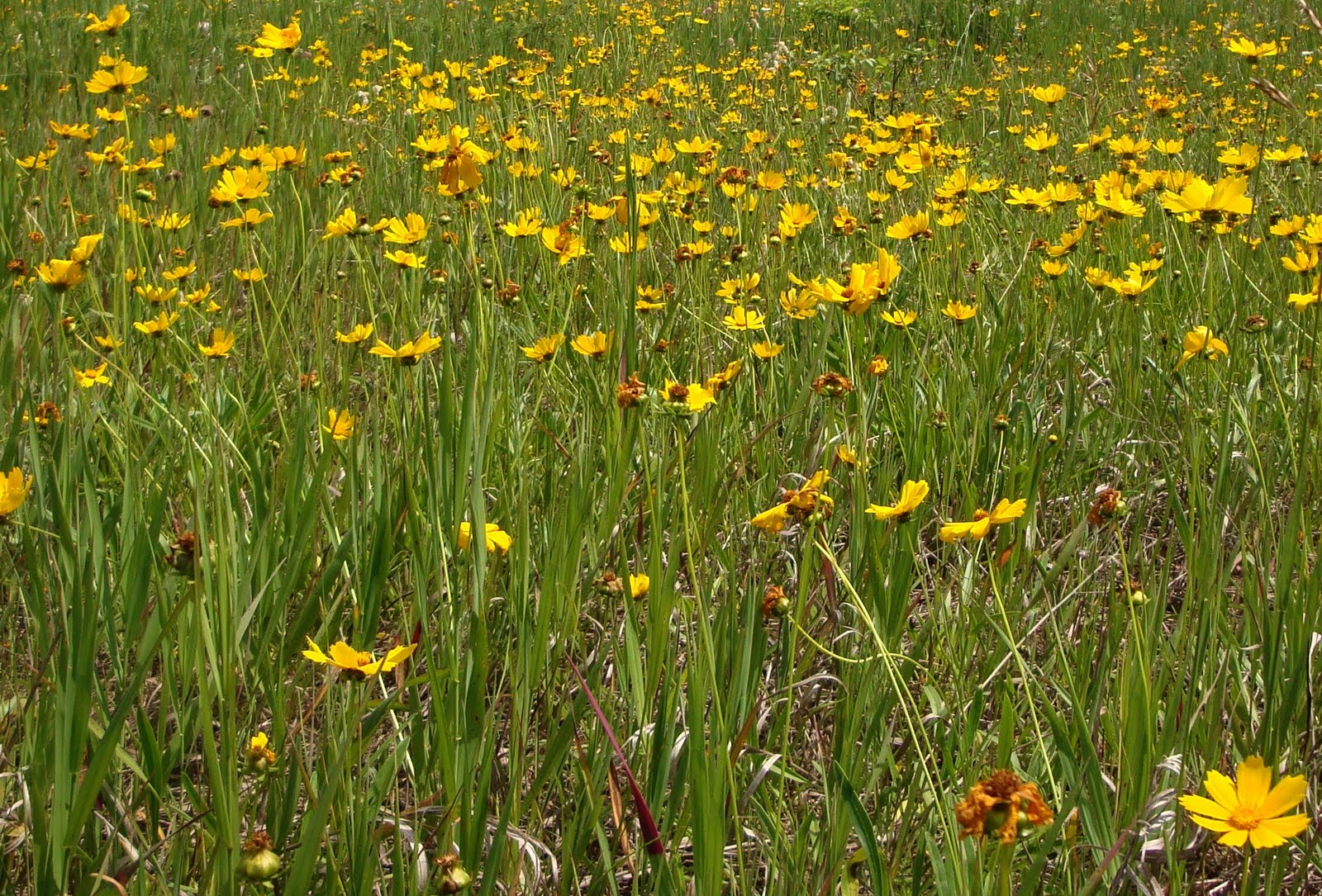
Dandelions, of course, need no introduction. A gorgeous, deep buttery yellow, they turn the front lawn into a carpet of cheerful golden blooms virtually overnight. The warm fuzzy feeling of seeing that many flowers in one place lasts about three days, maybe four. Then the cute yellow flowers turn into leggy, ugly stems with seed-heads spewing dandelion fluff everywhere and the plants themselves start to flourish, making the lawn look like a ragged salad patch for rest of the entire summer and fall. The first snowfall finally puts them mercifully out of sight.
The dandelion profusion has been working its way over years around the back yard too. I’d like to nuke them into oblivion and start over with sod. Or at the very least, hire some firm with a large truck full of chemicals and a well-designed ad in the Yellow Pages to sprinkle the yard with toxic fairy dust to make the weeds go away and replace them with lush grass to tickle my bare feet.
It’s been a fantasy of mine for years. In fact, pretty much every spring as the snow starts to recede and the faintest hint of green begins to shade the landscape, I survey my domain and say “yup, I’ve gotta call a lawn service one of these days.”
And then hesitation sets in, in the form of that little voice whispering “but what about the bluebirds?” Do I really want to see them cheerfully scarfing up a smorgasbord of tasty bugs basted in weed retardants? And then I know I’ll wait and see. Again. And if they show up, I’ll put off the whole chemical fairy dust solution for one more year, and just enjoy the bluebird show.
I wasn’t always a birdwatcher. Growing up in Chicago, the birds I remember pretty much consisted of the occasional duck paddling in a park pond, and the thousands of pigeons who strutted their stuff on the sidewalks of the Loop downtown, dodging foot traffic and taxicabs, a faint lavender sheen gleaming off their staid grey and white topcoats.
But marriage was followed a couple of years later by a move to the country, fields and trees in abundance. We followed a pretty traditional division of labor back then—he left in the morning to go to the office, and I stayed home with the baby and the dog, changing diapers and making dinner. There is just not much conversation you can get out of a toddler who’s under the age of two, or a dog of any age. And so what was outside my kitchen window started to catch my eye.
And oh, what a glorious profusion of things were waiting to be discovered! I found a small telescope somewhere among our belongings, and stood at the window over the kitchen sink like Captain Ahab astride the forecastle of the Pequod. I got a Roger Tory Peterson guide to the birds “east of the Rockies” and started to identify the residents of the countryside around me. Red-tailed hawks, turkey vultures, cardinals, chickadees, goldfinches, nuthatches, the variety was infinite, the amusement factor high. I didn’t need a bird guide to identify the red fox vixen who moved into a nearby woodchuck den with her four fluffy kits tumbling around her in the sunlight. I just felt a tug of maternal sympathy as she stoically sat, stiff as a ramrod, while the kits tumbled and played around her and nipped at her tail.
Eventually I got a pair of good binoculars for Christmas, and I parked them on the kitchen counter, between the microwave and the dish rack. They still don’t get to collect much dust.
Somewhere along the line when we first moved into the new house in the country, my father-in-law bemoaned the fact that when he was a young man, bluebirds had been common, but that he hadn’t seen one now for years. I wondered whether I could fix that. An article in the local newspaper about the efforts of various nature groups to provide bluebird nesting habitats steered me to a place to buy a couple of suitable nest boxes. I never knew birds could be so picky!!
Then, while killing time in a doctor’s waiting room, I skimmed a nature magazine and spied a short photo feature about someone who had reasoned that if you could decoy a duck, you should be able to decoy a bluebird. He’d cut a rudimentary bird shape from some plywood and painted it the right colors, and then snapped a picture of a male bluebird sitting atop the fake. It was one of those “eureka” moments, and I asked my father-in-law, whose retirement vocation was working with wood, to chisel me a three-dimensional decoy or two.
I can still hear his response, equal parts laughter, scoffing and incredulity. Still, he delivered. I dutifully painted one with my best imitation of nature—creamy white underside, rosy red chest, blue topcoat the brightest blue I could find. As soon as the paint was dry, I set the decoy atop the birdhouse closest to the house, with the most unobstructed view from the window over the kitchen sink. To be honest, that’s where most of my birdwatching takes place. My rule of thumb is…if I can’t see it while I’m washing dishes, it’s just not there.
Five minutes, tops. That’s how long it took for a gorgeous male to check out the new digs, discover that his rival was just a piece of furniture, and decide to move the family in. Some serious nest building followed, a tidy swirl of dried grasses mixed with the occasional long strand of hair from one of the horses’ tails. My father-in-law was truly impressed.
I’d bought the style of nest box that had a side door I could pull open and peek inside with. From everything I’d read, I’d learned that a pair of nesting bluebirds were unlikely to be spooked by the occasional visit from a human, and watching the pair’s progress as parents was fascinating. Day by day, one tiny blue egg was followed by another, then another, until the count was up to five and Ms. Bluebird started to settle in for the long haul. Sometimes when I opened the nest box door she blasted out of the hole in front, other times she just looked over her shoulder at me, unflinching, one busy, preoccupied suburban mom to another.
One pair of bluebirds or another have been raising their chicks in that same next box now for a quarter century. Well, not exactly the “same” next box, the originals finally fell apart a few years ago and when I went looking for replacements, found that the boxes with the side doors went for about thirty five friggin’ dollars each!! I paid it, though not without grumbling.
Being able to look into the nest is more than half the fun! There’s the anticipation of waiting to see when the actual “building” will start. Then guessing how many eggs will show up this time. The then chicks themselves—freshly hatched, eyes closed, impossibly tiny bundles of dark fluff and spiky little wing feathers with pale yellow beaks. They grow by leaps and bounds from day to day, until they’re speckled and plump and bright-eyed, jostling and jam-packed so tightly into the crowded box that they resemble a car full of clowns in a circus.
There have been dramas along the way. English sparrows, notorious for displacing bluebirds in violent fashion, had come to the yard in abundance for several years, drawn by the horses and the grain in their feed. They booted the nesting bluebirds out of their nest one year, but not before killing the babies. I was heartbroken.
Yet another year saw a freak late-spring six-inch snowfall just after the female bluebird had started to sit on her clutch of eggs. She bolted from the nest. I made quite a sight that morning, in a pair of snow boots and a long pink chenille housecoat, sprinkling a handful of mealworms from the bait section of the corner gas station on top of the next box to lure them back to the nest. It took them a long time to return.
I had my local ornithologist’s phone number committed to memory by this time, and I called him for advice. The eggs were most likely frozen at this point, the embryos dead, he said regretfully. There was nothing that could be done other than let the female return to the nest and brood them until she realized that none would hatch. Couldn’t I just rip the nest out and let them start over? I asked. No, he replied. Let nature take its course.
The next few weeks were torture. My heart broke for this little bird, who was doing such a diligent job of keeping her clutch of eggs warm, tragically unaware of the fact that they could never hatch. I called my ornithologist weekly, pleading for special dispensation to step in and rescue her from this empty exercise of maternal duty. The answer I invariably got was “no.”
Then, one sunshiny day, there seemed to be more activity at the nest than usual. I dutifully slogged out there, cutting a path through the tall grass to the box, which stood about eye-level on a metal pole. I popped the door open and looked inside, pessimistically expecting to see a melancholy tableau of motherhood denied. Mom wasn’t in the nest, but five tiny nuggets of fluff raised their heads at the intrusion, eyes sealed shut but curiosity still strong .
Against all odds, she’d done it!! I mentally saluted the universal tenacity of motherhood in the face of impossible odds.
I wonder how long bluebirds live, and how many generations of the same family have made a home in that same nest box. Bluebirds are known to be territorial, and generally require a distance of about three hundred feet from the next nesting pair to be comfortable. How do they divvy up the occupancy rights to this prime piece of real estate? After migrating south for the winter, do the kids come back to the old neighborhood just to visit where they grew up? Who gets to live in the old house once the folks have passed on or moved away?
Every fall, when it’s just before migration time, I’ll see the pack of this year’s crop of nestlings, with youthful speckles and bellies so huge from gorging on a bumper crop of summer insects that it seems unlikely that they could fly for a block, much less fly south for a few hundred miles. They mill around together, four or five of them, hanging out on the swing set or the back porch, checking out the bird feeder full of sunflower seeds, sampling the hulled seeds out of curiosity, just to see what was drawing in every other bird in the neighborhood.
They are a captivating, feathery link to the past, and a fond link to my late father-in-law, and a perfect joy in the present, and a source of hope and optimism that, at some time, it will be spring again. And for at least one more year, I can pretty well predict that while I may again think of calling a lawn service to finally kill off my dandelions next March of April…the smart money will still be on the birds.